Confirm the RPE and wearer details
Tell us the facepiece make, model, type and size, the number of wearers and the work location. We will confirm the proposed testing method and preparation requirements.
Respiratory protective equipment
Practical testing and RPE guidance for people who rely on tight-fitting respiratory protection at work.
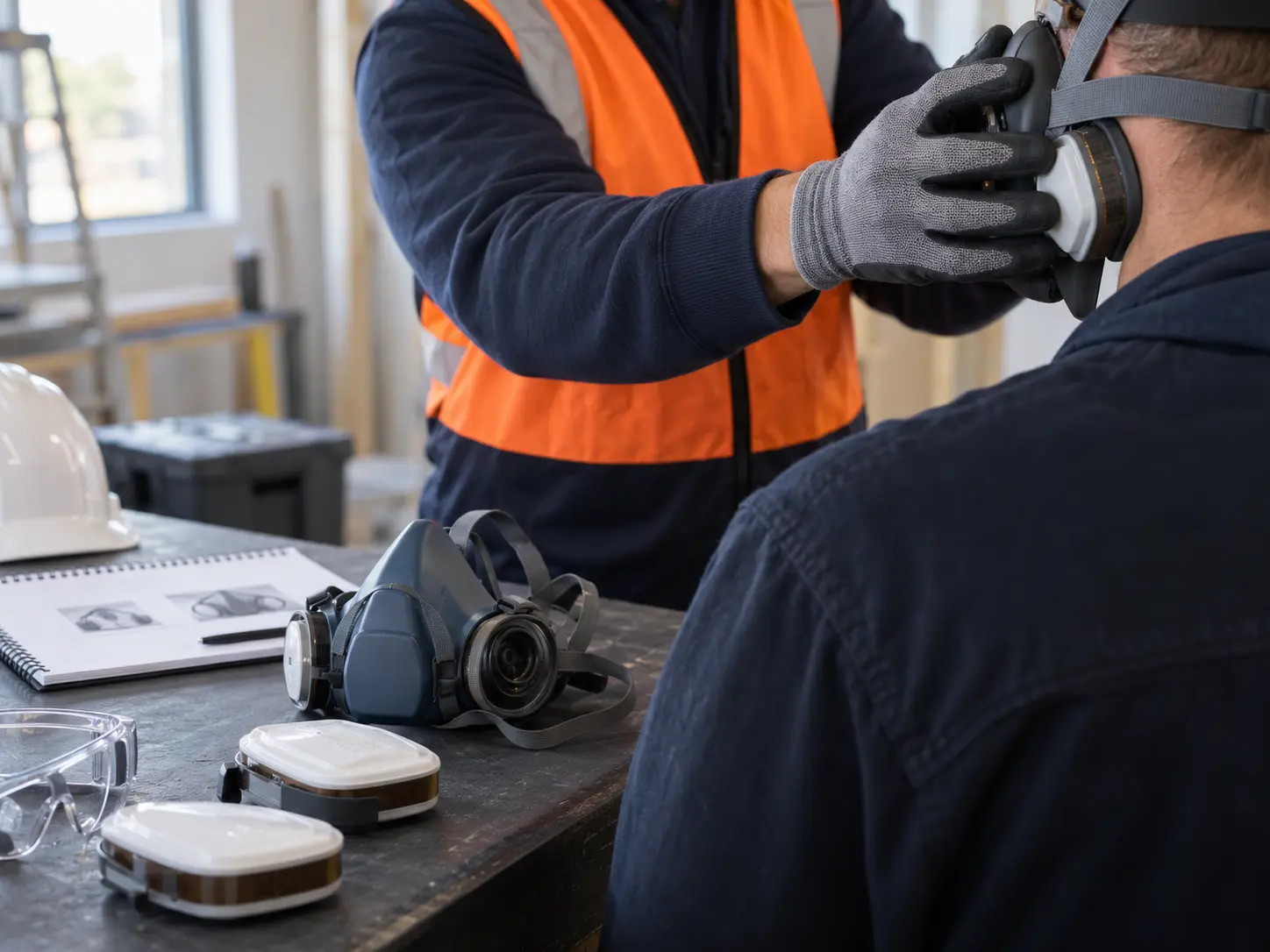
Fit matters
Tight-fitting RPE depends on a good seal against the face. Face-fit testing checks a specific wearer against the make, model, type and size of facepiece they will use.
The service
Tell us the facepiece make, model, type and size, the number of wearers and the work location. We will confirm the proposed testing method and preparation requirements.
Wearers need to follow the pre-test instructions. Hair between the facepiece seal and the skin prevents a reliable seal and must be considered when arranging the appointment.
The test applies to the specific wearer and facepiece presented. Practical fitting, strap adjustment and wearer seal checks are explained as part of the agreed session.
The same make, model, type and size used for a successful test should be available to the wearer. A change in RPE or relevant wearer circumstances may require further testing.
Face-fit testing forms one part of effective respiratory protection. The RPE must first be suitable for the hazard, task, expected exposure, work rate, environment and other PPE being worn.
HSENI explains that tight-fitting facepieces need to fit the wearer’s face to provide adequate protection and that fit testing should be carried out as part of the selection process. Where a person uses more than one type of tight-fitting facepiece, each type should be fit tested.
For further information, see the HSENI guidance on respiratory protective equipment.
Tell us what RPE is being used, where the testing is needed and how many people require appointments.